
Introduction
Few meals are as closely connected with British culture as Fish and Chips. This familiar combination of crispy battered fish and golden fried potatoes has been enjoyed by generations. From traditional seaside visits to busy city streets, it remains a comforting food choice that brings together flavour, history, and everyday British life.
Thank you for reading this post, don't forget to subscribe!Although it is often recognised as a traditional British dish, its story is connected to different communities, changing food habits, and the growth of towns during the nineteenth century. Understanding its background makes this simple meal even more interesting.
The Early History of Fish and Chips
The history of Fish and Chips goes back further than many people realise. Fried fish was already popular in London before it was paired with potatoes. The cooking tradition is often linked to Sephardic Jewish communities who brought their fried-fish traditions to Britain.
During the nineteenth century, fried fish became an affordable meal for working families. At the same time, fried potatoes were becoming popular in northern England. Eventually, these two foods were brought together to create the familiar combination enjoyed today.
According to the London Museum’s history of fish and chips, Joseph Malin is associated with opening an early fish and chip shop in London’s East End around 1860. However, the exact identity of Britain’s first fish and chip shop remains debated, with Lancashire also claiming an early place in the story.
Why Fish and Chips Became So Popular
One major reason behind the popularity of Fish and Chips was its affordability. During the industrial period, many workers needed filling meals that were easy to buy and convenient to eat after a long day.
The expansion of railways and improvements in fishing and food transportation also helped make fish more widely available. Small family-run shops began appearing in towns and cities, allowing more people to enjoy freshly prepared meals without cooking at home.
Over time, fish and chip shops became familiar parts of British neighbourhoods. They were not simply places to buy food; they also became part of everyday community life.
Traditional Ingredients and Preparation
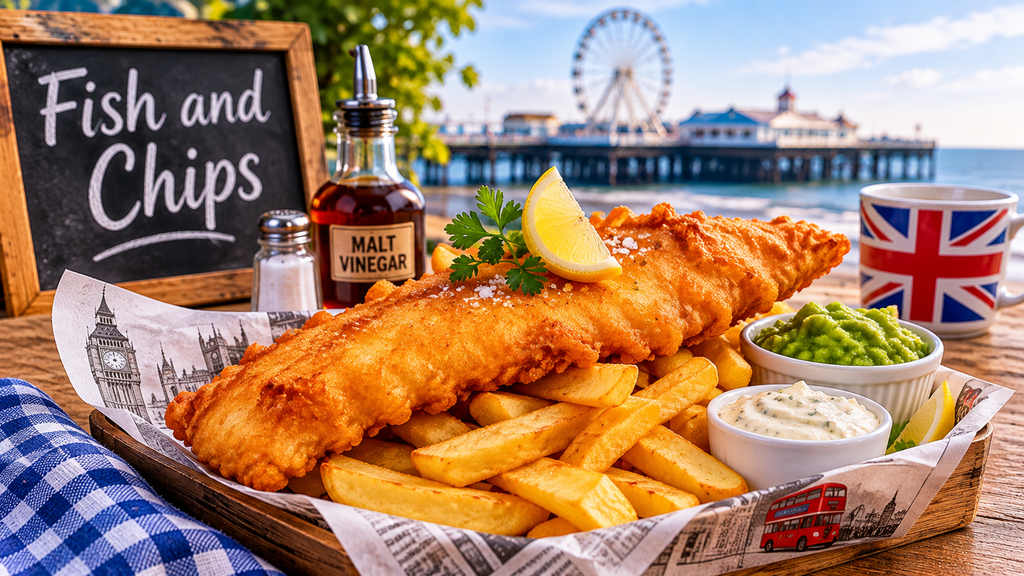
A classic serving of Fish and Chips usually includes a white fish such as cod or haddock, coated in batter and fried until crisp. The fish should remain soft and flaky inside, creating a pleasant contrast with its crunchy outer layer.
The chips are generally thicker than ordinary fast-food fries. They are cooked until tender inside with a golden exterior. Salt and malt vinegar are traditional additions, while some people enjoy their meal with mushy peas, tartar sauce, or curry sauce.
Although recipes and cooking methods vary between shops, the appeal comes from keeping the ingredients simple and preparing them well.
Fish and Chips During Wartime
Fish and Chips also holds an interesting place in British wartime history. During both World Wars, the meal remained an important source of comfort for many people. Its continued availability during the Second World War helped maintain a sense of normality during a difficult period.
Food traditions often become especially meaningful during challenging times. For many British families, a familiar takeaway meal offered a small moment of enjoyment when everyday life was uncertain.
Fish and Chips in Modern British Lifestyle
Today, Fish and Chips continues to be enjoyed across Britain. Some people associate it with seaside holidays, while others see it as a convenient Friday evening meal or a familiar weekend treat.
Modern fish and chip shops offer different choices, including alternative fish varieties, vegetarian options, and a wider selection of sauces. Many businesses are also paying attention to responsible sourcing and changing customer preferences.
If you enjoy discovering food traditions and everyday lifestyle stories, explore more articles in the Lifestyle section of Globe & Hearth.
Frequently Asked Questions
1. Where did Fish and Chips originate?
Fish and Chips developed in Britain during the nineteenth century. Fried fish and fried potatoes had separate histories before becoming a popular combined meal.
2. Who opened the first fish and chip shop?
Joseph Malin is often credited with opening an early fish and chip shop in London’s East End around 1860. However, there are competing historical claims from northern England.
3. Which fish is traditionally used in Fish and Chips?
Cod and haddock are two traditional choices. Other white fish varieties may also be used depending on availability and regional preferences.
4. What is traditionally served with Fish and Chips?
Common accompaniments include salt, malt vinegar, mushy peas, and tartar sauce. Some shops also offer curry sauce and other condiments.
5. Why is Fish and Chips important to British culture?
It became an affordable and familiar meal for working families and eventually developed into a recognised part of British food culture and everyday lifestyle.
Final Thoughts
Fish and Chips is much more than a combination of fried fish and potatoes. Its history reflects changing communities, working-class food traditions, and the development of Britain’s local food culture. Even after generations, this classic meal continues to hold a special place in British life, proving that simple food can create lasting traditions.